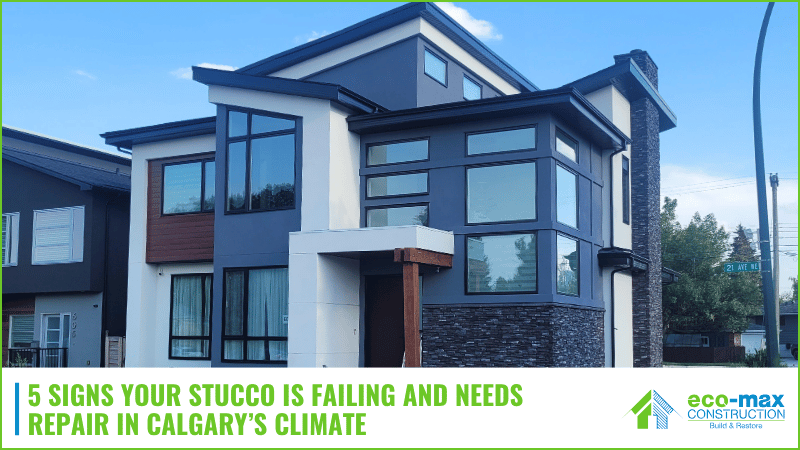
Water damage behind stucco is not always obvious from the outside. Small cracks, staining, bulging areas, peeling finishes, or recurring deterioration can sometimes indicate that moisture is getting past the exterior surface. In Calgary, freeze-thaw cycles, snow, rain, rapid temperature changes, aging materials, and vulnerable exterior transitions can all contribute to moisture-related problems. This guide explains the common signs of water damage behind stucco, how moisture can affect insulation, sheathing, and overall building envelope performance, and when repair or replacement may be appropriate. Eco-Max Construction provides stucco repair and exterior finishing services for Calgary homes and commercial properties, with practical solutions based on the condition of the existing exterior. If you are concerned about possible moisture damage, contact our team to request an inspection.
Stucco is designed to provide a durable exterior finish, but like any exterior cladding, its long-term performance depends on the condition of the entire wall assembly. Water problems can develop when moisture finds a pathway through damaged areas, cracks, openings, or vulnerable transitions.
Calgary homes experience demanding seasonal conditions. Temperatures can move above and below freezing repeatedly, particularly during spring, fall, and Chinook weather patterns. When moisture reaches cracks or openings and then freezes, expansion can contribute to further deterioration.
Rain, melting snow, wind-driven moisture, and repeated temperature swings can also place stress on exterior surfaces over time. This does not mean that every crack or stain indicates serious water damage, but visible changes should be investigated when they persist or continue to worsen. Age can also play a role.
Older stucco may have experienced years of weather exposure, movement, previous repairs, or deterioration around exterior penetrations and transitions. Understanding the source of the problem is important before deciding how much stucco needs to be repaired.
Water damage is sometimes hidden because the problem develops behind the finished surface. Homeowners may first notice changes in the appearance or condition of the stucco rather than visible water itself. Signs worth watching for include: Cracks that continue to grow or return.
Small surface cracks can occur for different reasons, but recurring or expanding cracks may require closer inspection. Discolouration or staining. Dark patches, streaks, or areas that remain visibly different after the wall has dried may indicate repeated moisture exposure. Bulging or separation.
Stucco that appears swollen, loose, or separated from the wall can indicate deterioration within the assembly. Water staining. Stains around windows, doors, roof-to-wall transitions, or other exterior details may help identify where moisture is entering. Peeling or flaking finishes.
Repeated peeling, flaking, or deterioration can sometimes be associated with moisture moving through or remaining within the wall. Soft or damaged areas. Sections that appear less solid than surrounding stucco may require further investigation. Repeated problems in the same location.
If cracks, staining, or surface deterioration return after previous work, the underlying cause may not have been fully addressed. One sign by itself does not necessarily confirm hidden water damage. The location, extent, age, and pattern of deterioration all matter.
Eco-Max Construction can assess visible stucco damage and help determine whether a localized repair is reasonable or whether additional investigation is needed.
Exterior Moisture intrusion can occur through several areas of an exterior wall. Sometimes the source is directly beside the visible damage, while in other situations water travels before becoming noticeable.
Cracks are one potential entry point.
Openings around windows, doors, exterior penetrations, and transitions between different exterior components can also require attention as materials age or move.
Roof-to-wall areas can be particularly important. Water may enter at an upper location and travel behind the exterior before visible deterioration develops lower on the wall.
Installation details can also affect long-term performance. This does not necessarily mean the original installation was defective. Buildings move, materials age, sealants and finishes deteriorate, and years of Calgary weather can change the condition of an exterior. For that reason, simply covering the visible damage without considering where the moisture originated may not provide a lasting solution.
The effect of moisture depends on how much water is entering, how long the condition has existed, and which components of the wall have been affected.
When moisture repeatedly reaches materials behind the stucco, it can contribute to deterioration of the sheathing or other affected components.
Insulation performance may also be affected if moisture reaches the insulated portion of the wall. Another concern is the overall performance of the exterior envelope. The exterior wall works as a system, so damage in one area can affect how effectively the assembly manages moisture and protects the building.
In Calgary, freeze-thaw conditions can make existing exterior deterioration more noticeable. Moisture that enters a damaged area may freeze during colder temperatures, placing additional stress on cracks and weakened sections.
The goal is not to assume that every damaged area has extensive hidden deterioration. Instead, the appropriate approach is to determine the extent of the problem before selecting the repair.
A successful stucco repair should address more than appearance. Consider a Calgary home with staining and damaged stucco below a roof-to-wall transition. The visible deterioration might be several feet below the actual moisture entry point.
Repairing only the stained area may improve its appearance without resolving the original source. A similar situation can occur around windows or other exterior transitions. Water may follow a path behind the exterior before reaching an area where damage becomes visible.
This is why Eco-Max Construction approaches water-related stucco repair by considering both the visible damage and the surrounding exterior conditions. Finding the likely source helps determine what needs to be opened, repaired, replaced, or refinished.
The first step is typically a visual assessment of the exterior. The contractor may examine the location and pattern of cracks, staining, separation, damaged finishes, and nearby transitions. Areas around windows, doors, rooflines, and other exterior details may deserve particular attention depending on where the problem appears.
If the condition suggests possible damage behind the surface, some stucco may need to be removed to expose the underlying materials. This allows the condition of the wall to be evaluated more accurately. Once opened, the affected area can be assessed to determine how far deterioration extends and where sound materials begin.
Eco-Max Construction can then establish a repair scope based on what is actually found rather than assuming that the entire wall requires replacement.
Not every case of water damage requires complete stucco replacement. Localized repair may be appropriate when the affected area is limited and the surrounding stucco remains in suitable condition. The damaged material can be removed, the exposed area assessed, and affected components addressed before the stucco system is restored.
A larger repair or reapplication may be more appropriate when: Damage extends across a significant section of the wall. Multiple areas show recurring deterioration. Stucco is extensively loose, bulging, or separating. Underlying materials are damaged beyond the original visible area.
Previous localized repairs have not resolved the problem. The surrounding exterior has deteriorated enough that another small patch would not be practical. The decision should be based on actual conditions rather than automatically choosing the largest repair. For homeowners concerned about water damage Calgary properties may experience, a careful assessment can help separate a manageable localized problem from a larger building envelope concern.
The exact repair process depends on what is discovered during inspection, but proper work generally begins by removing damaged material and exposing the affected area. The repair area needs to reach stable, serviceable material. If damaged underlying components are discovered, they need to be evaluated and addressed as part of the repair scope.
Once the underlying condition has been dealt with, the exterior can be prepared for restoration. Stucco repair involves rebuilding the affected area appropriately and applying the exterior finish so the repaired section integrates as closely as practical with the surrounding wall.
Surface preparation is an important part of this work. Repairing over loose, deteriorated, or moisture-affected material can limit the durability of the finished repair. Finishing also requires attention to texture and appearance.
Existing stucco has been exposed to weather and sunlight, so an exact visual match is not always possible, particularly on older homes. A professional repair should set realistic expectations about how closely the new work can blend with the existing finish. How Long
There is no single timeline for water-damaged stucco because the scope can change once the affected area is opened. A small localized repair will generally require less work than a project involving a larger wall section or damaged underlying materials. Access, height, finish requirements, and the extent of deterioration can also influence the schedule.
Weather matters as well. Calgary exterior work can be affected by rain, cold temperatures, rapid weather changes, and the drying or curing requirements of the materials being used. Some stages may require adequate drying or curing time before the next step can proceed. Rushing these stages simply to shorten the schedule is not a good approach.
Eco-Max Construction provides a repair scope based on the visible conditions and adjusts recommendations when previously concealed damage is discovered.
Water Damage in Homes, Multi-Unit Properties, and Older Buildings Moisture problems can appear differently depending on the property. On a detached Calgary home, damage may be concentrated below a window, near a roofline, or on a heavily weather-exposed wall. In these situations, a localized repair may be possible if the surrounding exterior remains in good condition.
Multi-unit and commercial properties may have larger wall areas and more exterior transitions. Damage can also occur at different elevations, making access and investigation important considerations when developing the repair plan.
Older properties may have previous repairs or exterior materials that have experienced decades of seasonal movement and weather exposure. In these cases, determining where healthy material begins can be an important part of establishing the proper scope.
Eco-Max Construction works with residential and commercial exterior projects in Calgary and evaluates each situation based on the actual condition of the building.
A small cosmetic issue does not always require immediate major work. However, confirmed or recurring moisture intrusion should not simply be covered and forgotten. Continued exposure can allow deterioration to spread beyond the original repair area.
A small opening can become larger, finishes can continue to separate, and underlying materials may experience additional moisture exposure. This can make a future repair more involved. Early assessment gives homeowners more information and often provides more repair options.
It also helps identify whether the problem is primarily at the surface or whether investigation behind the stucco is justified. The practical objective is to address the cause before spending money repeatedly repairing the visible symptom.
Consider contacting a professional when stucco cracks are growing, staining repeatedly returns, sections begin to bulge or separate, finishes continue peeling, or there are visible signs that water may be entering around exterior transitions. Early action does not necessarily mean extensive construction. In many cases, the first step is simply determining what is happening and how much of the exterior is affected.
When working with Eco-Max Construction, the process starts with reviewing the visible condition and identifying areas that may require closer investigation. If removal is necessary, the affected stucco can be opened to assess the condition behind it and establish a more accurate repair scope.
With residential and commercial exterior experience and knowledge of Calgary's demanding seasonal conditions, Eco-Max Construction focuses on practical recommendations, reliable and consistent workmanship, and repairs appropriate to the actual condition of the property.
If you have noticed staining, cracking, bulging, separation, or other possible signs of water damage behind your stucco, addressing the issue early can help limit further deterioration and provide a clearer understanding of what your exterior needs.
Contact Eco-Max Construction to schedule a consultation and request an inspection of your stucco or exterior damage in Calgary.contact-form
Eco-Max Construction is a trusted Calgary stucco installation and repair company known for quality craftsmanship and reliable service since 2016. Serving homeowners, condo corporations, and property managers, they specialize in stucco repairs, exterior painting, and damage restoration, delivering durable, long-lasting results with a strong focus on customer satisfaction and attention to detail.
In many cases, yes. A small, localized woodpecker hole may be repairable without replacing a large section of EIFS, provided the surrounding material remains sound and there are no indications of more extensive moisture-related deterioration. The appropriate repair depends on the depth of the damage, condition of the insulation, location of the hole and exposure to weather. Because the visible opening does not always show the full extent of damage underneath, an inspection is useful before deciding on the repair scope. Eco-Max Construction can assess woodpecker damage on Calgary properties and determine whether localized repair or more extensive work is appropriate.
It is generally better to address an open EIFS hole sooner rather than leaving it exposed through changing weather conditions. Calgary experiences rain, snow, freezing temperatures and repeated freeze-thaw cycles, so an opening in the exterior finish can provide an opportunity for moisture to reach underlying components. This does not mean every recently discovered hole is an emergency, but delaying repairs can allow a relatively localized issue to become more complicated. If insulation is visibly exposed, several holes are present, or you notice cracking, staining or separation nearby, consider arranging an inspection. Contact Eco-Max Construction to have the affected area assessed and discuss suitable repair options.
Eco-Max Construction will assess the visible woodpecker holes along with the surrounding EIFS or stucco to better understand the extent of the affected area. Factors such as the number and size of holes, accessibility, condition of surrounding materials and signs of moisture-related deterioration can influence the recommended repair. The goal is to determine whether localized repair is reasonable or whether a larger section requires attention. Repair scheduling can depend on access, project size, Calgary weather and the drying or curing requirements of the work involved. For residential or commercial woodpecker damage in Calgary, contact Eco-Max Construction to request an inspection and discuss the next steps.
Have a stucco project or need expert repairs? The Eco-Max Construction team is here to help! Whether it’s a small fix or a full exterior upgrade, we’re ready to deliver top-quality results. Reach out Today via Phone or fill out our contact form below!
STUCCO CALGARY | EXTERIOR PAINTING | PARGING | WOODPECKER REPAIR | 5 SIGNS STUCCO IS FAILING

Eco-Max Construction specializes in expert stucco installation, repairs, and exterior solutions designed to protect and enhance your home. With a focus on quality craftsmanship and long-lasting results, we deliver durable, high-quality finishes. Whether you need stucco for a new build, repairs, or exterior painting, we’ve got you covered. Contact us today for a free inspection!